

The Remembering
The first time I went to Brazil, I was a guest.
The second time, I was a remembering.
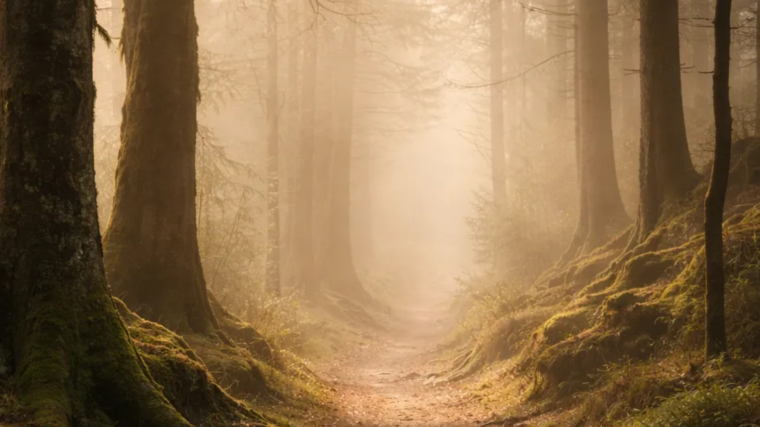
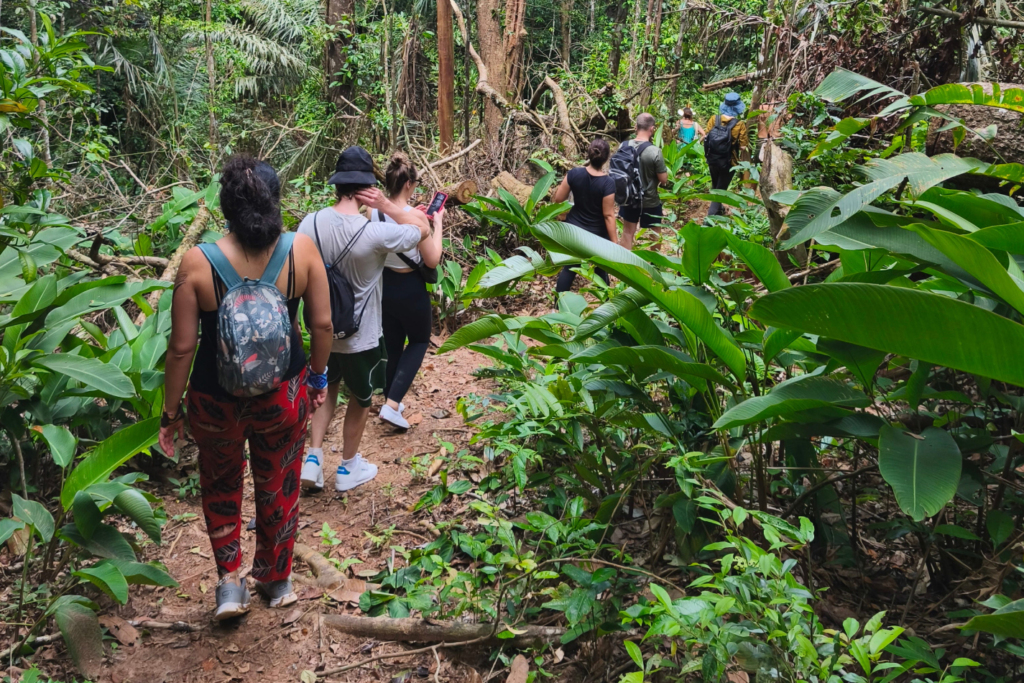
Among the Pataxó, the forest moved like a hymn. Everything alive was listening trees speaking through the wind, the river repeating the same word until it turned into prayer. And somewhere in that sound, I heard my own people. The Irish in me, old as oak bark, whispering back through time: we too once lived like this.
Ireland Was a Forest Once
Not just a scattering of trees, but a green body breathing from shore to shore.
Eighty percent of this island once covered in woodland oak, yew, hazel, pine until empire and axe stripped her bare. By 1925, we were down to one percent. One percent of our original forest left standing.
But the memory of the forest didn’t die. It survived in the law, in the old tongue, in the way our ancestors named the world.
In Bretha Comaithchesa the ancient Brehon laws of neighbourhood — trees were classified like kin. The “lords of the wood” were honoured: oak, ash, yew, hazel, pine. To wound them was a crime, and the one who cut without cause paid in livestock. Even then, the forest had a name and a right.
This is how we once belonged.
The Soul of a Tongue
Language carries that memory still.
In English I say, I am sad.
The “I” owns the sadness.
In Irish I say, Tá brón orm sadness is upon me.
The sorrow moves through me, like weather. It is not mine to keep.
This is the soul of our tongue fluid, relational, reverent.
English fixes; Irish flows. English says mine; Irish says with.
Even with the small bit of Gaeilge I carry, I feel the ancestors stir when I speak it. Their breath returns to the world. Words like birds landing back on native branches. The air changes. The forest listens.
A Mirror in Brazil
In Brazil, I saw the same truth.
The Pataxó speak Patxohã a language reborn after near extinction.
When they speak it, trees lean closer. The river knows its own name again.
It reminded me that language and land rise together lose one, and you lose both.
Standing with them, I understood why I came:
to remember Ireland not as a colonised island, but as a jungle that once knew itself.
To speak the words that still know how to kneel.
The Colonised Tongue
English is the tongue of trade. It measures, it owns, it extracts.
It was never made to speak to rivers or roots.
But Irish was.
So was Patxohã.
These are not languages of economy, but of ecology.
They do not conquer; they commune.
When I say Tá buíochas orm gratitude is upon me I am reminding myself that I am not the source. I am part of the pattern.
The Seeds I Plant
The forest is not gone, only hidden.
Words can still re-seed what was lost.
Breath is ceremony.
I will let Irish shape my English, the way wind shapes stone.
I will speak as the trees once spoke slowly, truthfully, with roots.
I will keep planting: words, saplings, prayers.
And when I walk through what’s left of our woods, I will whisper,
Tá teanga teanga na gcrainn orm.
The language the language of trees is upon me.
And I will plant my seeds.
Author’s Reflection
This pilgrimage was a conversation between two forests one still standing, one trying to return. Between two languages that remember how to belong to the land. Between two peoples whose roots were cut but not killed.
When we speak from that place from memory, not from ownership the world listens.