

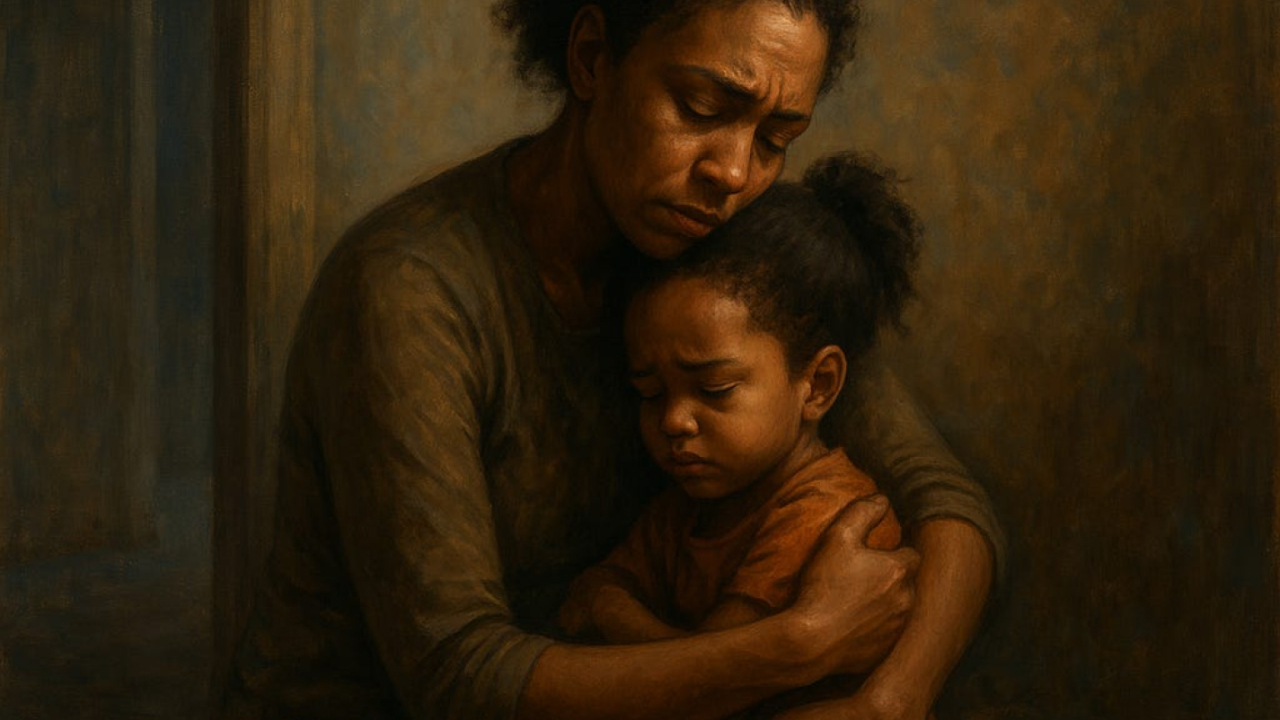
Many imagine trauma as something loud.
A breaking.
A moment clearly marked in memory.
But for many of us, it began in the quiet.
It began when a child learned, not through words but through atmosphere, that their true self was unwelcome.
Not because anyone said it directly, but because of how the energy shifted in the room when they laughed too loudly, cried too honestly, or asked for too much.
Trauma can be a parent turning away instead of toward.
A sigh heavy enough to silence a heart.
A gaze that carried disappointment instead of delight.
This is where the wound begins.
Not with violence, but with disconnection.
We learned early that love was not simply given, but must be earned through self-betrayal:
Be good.
Be quiet.
Be easy.
Don’t need too much.
Don’t take up space.
So we folded ourselves into smaller shapes.
We trimmed pieces of our soul until we became something more acceptable.
And we were praised for it.
Strong.
Resilient.
Independent.
But resilience based on self-abandonment is not wholeness.
It is survival.
Then one day we find ourselves in adult bodies, with adult responsibilities, trying to create adult relationships while still operating from the child who learned to disappear to stay safe.
That child is still scanning for danger.
Still softening to keep the peace.
Still over-giving to earn staying.
Still fearing the withdrawal of love more than the loss of self.
And she is tired.
There is an old African proverb:
The child who is not embraced by the village will burn the village down to feel its warmth.
This is not destruction.
This is longing, unmet.
When we are not met, we ache.
When we ache without relief, we adapt.
And when our adaptations become identity, we forget the shape of our original self.
Healing Is Remembering
Not remembering the story many of us know the story well.
The remembering is cellular.
A return to presence.
To sensation.
To the body.
It is sitting quietly with that younger self and letting them know:
You do not have to earn your place anymore.
A Personal Reflection
There was a time I believed my strength was simply who I was.
Strong enough to carry everything.
Strong enough to swallow pain.
Strong enough to stay standing no matter what.
But beneath that strength was a child who had learned that collapse meant abandonment.
That softness was dangerous.
That real emotion would make me “too much.”
My strength was not strength.
It was a fortress.
The moment I realized this was not dramatic.
It was not during a ceremony or a moment of revelation.
It was in the kitchen, warm water running over my hands, when something inside me softened for the first time in years.
I felt the weight of all the times I needed more than I received.
All the times I stayed silent to keep the peace.
All the times I disappeared inside myself.
I didn’t fall apart.
I simply let myself feel the grief of a child who had to grow up too soon.
And something began to open.
This is how healing often begins quietly.
Not with fireworks, but with permission.
Permission to feel.
To need.
To want.
To expand into the space we once learned to leave.
I still meet that child.
I meet her gently.
I do not rush her.
I do not try to fix her.
I let her know:
You are allowed here.
You do not have to perform anymore.
Your existence is enough.
This is the work.
Steady.
Human.
Whole.
If This Landed Somewhere Inside You
Take your time with it.
Read it slowly.
Feel where your breath changes.
There is a reason certain words find us when they do.
Healing is not linear.
It is a spiral.
We return to the same rooms of the heart again and again
each time with a little more courage.
If you are in a season where something is asking to be met stay close.
I will continue to write here about the inner child, ancestral patterns, the body’s knowing, and the long return to ourselves.
You don’t have to rush.
Just stay.
Be here.
We go gently,
Stacey
Author’s note:
I write here about healing, integration, and the body’s return to truth.
If this piece resonated, you can subscribe to receive future reflections directly in your inbox.